
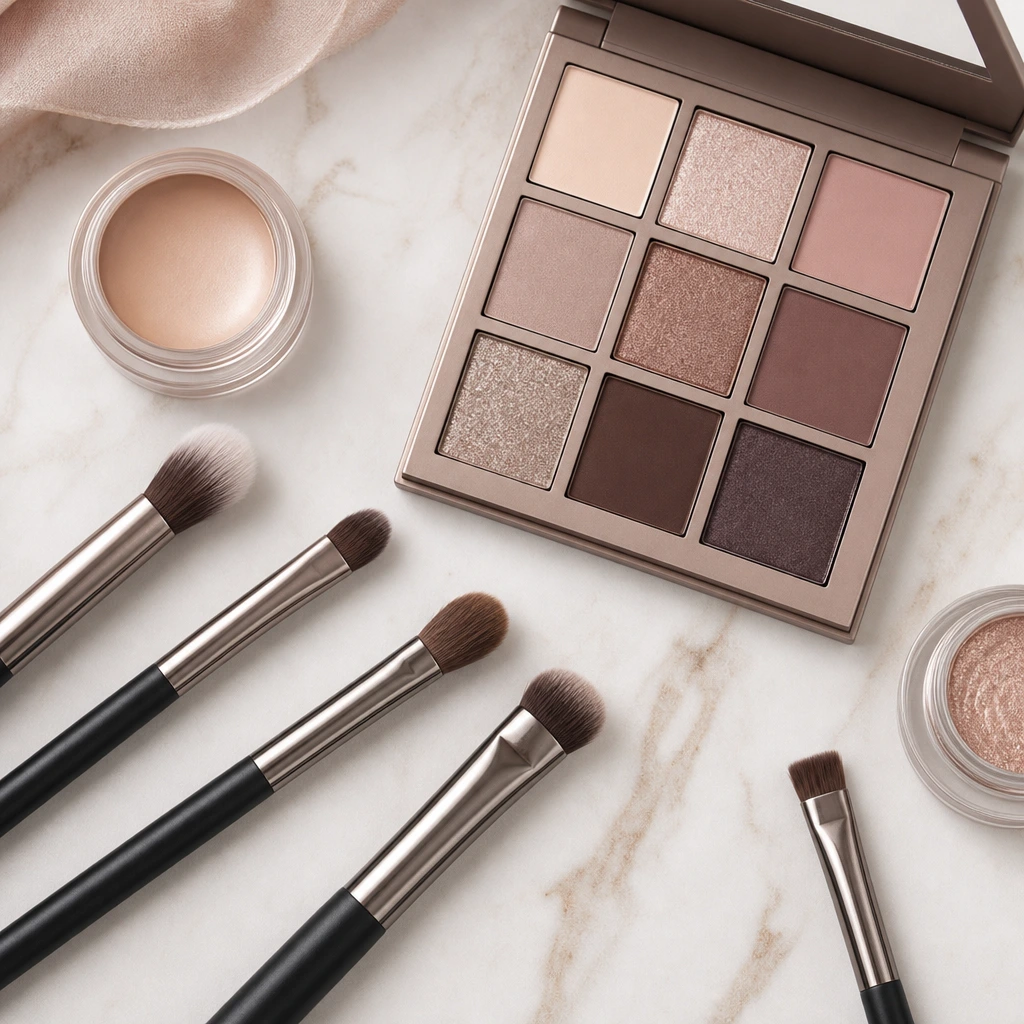
Eyeshadow on mature, crepey lids doesn’t have to be frustrating. With the right techniques, formulas, and tools, you can create smooth, lifted, beautifully blended eye looks that enhance your natural features rather than settling into fine lines. This guide breaks down exactly how to apply eyeshadow on mature, crepey lids: techniques that truly work — step by step.
Why Mature Lids Behave Differently
As skin ages, collagen decreases and the eyelid becomes thinner, looser, and more texturedin other words, crepey. This means:
- Eyeshadow can skip or drag
- Shimmer may emphasize texture
- Creases can swallow color
- The lid may fold over itself, hiding your work
Understanding this helps you choose techniques that work with your skin instead of fighting it.
1. Prep the Lid for Smooth Application
Use a lightweight, hydrating eye cream
Avoid thick balms — they make shadow crease. Instead, choose a gel‑cream that absorbs quickly and plumps the skin just enough to reduce crepiness. See my article, Anti-Aging Eye Cream Guide, for more information on eye creams.
Apply a gripping eyeshadow primer
Primer is non‑negotiable. It evens out texture, prevents skipping, and keeps shadow from migrating into fine lines. Tip: Tap it in with your finger rather than rubbing, which can tug delicate skin. Personally, I use NYX Professional Makeup Lid Lingerie Cream Eye Pigment as eyeshadow primer. A little goes a long way and it is affordable.
2. Choose the Right Formulas for Mature Lids
Cream‑to‑powder shadows
These blend easily on textured skin and set without creasing. They’re ideal for one‑and‑done looks.
Matte and satin finishes
Matte shadows create a smooth, lifted look. Satin adds soft sheen without emphasizing texture. Avoid chunky glitter — it exaggerates crepiness. These are great eyeshadows for mature eyes.
Neutral, mid‑tone shades
Extremely light or extremely dark shades can make texture more obvious. Mid‑tones blend seamlessly and create natural depth
3. Use Brushes That Don’t Tug the Skin
Fluffy blending brushes
They disperse pigment gently and prevent harsh edges.
Soft, domed detail brushes
Perfect for hooded or crepey lids because they place color precisely without dragging.
Avoid stiff brushes
4. Master the Application Technique
Lift the lid with your finger — gently
Instead of pulling the skin tight, lightly lift the brow bone just enough to smooth the lid. This gives you access to the natural crease.
Apply shadow in thin layers
Thick layers settle into folds. Thin layers build depth without emphasizing texture.
Use a “buffing” motion, not sweeping
Sweeping motions drag the skin. Buffing (small circular motions) blends pigment smoothly.
Place your crease color slightly above your natural crease
For hooded or droopy lids, the real crease disappears when the eye is open. Creating a new crease slightly higher opens the eye and gives a lifted effect.
5. A Foolproof Eyeshadow Routine for Mature Lids
Step 1: Prime
Hydrate → prime → let it set for 20–30 seconds.
Step 2: Apply a matte base shade
Choose a shade close to your skin tone. This creates a smooth canvas.
Step 3: Define the crease (the “new” crease)
Use a mid‑tone matte shade and buff it slightly above your natural crease.
Step 4: Add lid color
Choose a satin or soft matte shade. Press it onto the lid with your finger or a flat brush.
Step 5: Soften edges
Use a clean fluffy brush to blend the transition area.
Step 6: Optional — brighten the inner corner
Use a subtle satin shade. Avoid frosty shimmer.
Step 7: Tightline instead of heavy liner
Traditional eyeliner can make the lid look heavier. Tightlining adds definition without closing the eye. Tip: be sure to use ophthalmologists-tested for safety.
6. Finishing Touches That Make a Big Difference
Curl your lashes
It instantly opens the eye, especially if the lid is hooded. Even without applying mascara, curling lashes helps on no-makeup days.
Use a tubing mascara
Tubing formulas don’t smudge onto crepey skin and are easy to remove. Personally, tubing mascara does not work for me because it pulls out my curl. See my Shop My Favorites page for my favorite mascaras that do not smudge. Tip: If you are having issues with smudging, try not applying mascara to your bottom lashes.
Highlight the brow bone sparingly
Too much shimmer here can emphasize texture. A soft matte ivory is perfect. An ivory colored eyeshadow works will for this.
7. Common Mistakes to Avoid
- Using heavy shimmer on the lid
- Applying thick layers of shadow
- Skipping primer
- Using stiff brushes
- Placing crease color too low
- Pulling the skin tight while applying
FAQ
1. What eyeshadow finish is best for mature, crepey lids?
Matte and satin finishes work best because they smooth texture and avoid emphasizing crepiness.
2. How do I stop eyeshadow from creasing on aging eyelids?
Use a lightweight eye cream, a gripping primer, and apply thin layers of shadow.
3. Can older women wear shimmer eyeshadow?
Yes — choose fine, subtle shimmer instead of chunky glitter to avoid highlighting texture.
4. What is the best way to apply eyeshadow on hooded mature eyes?
Place your crease color slightly above your natural crease to create a lifted look.
Final Thoughts
Mature, crepey lids aren’t a limitation — they simply require a smarter approach. With the right prep, formulas, and techniques, you can create eye looks that are smooth, lifted, and flattering at any age. Makeup should enhance your confidence, not fight your skin’s natural evolution.
Aging is a privilege—but glowing, healthy skin at any age is totally achievable.